
Intellectual property: quote it or build on it
Guardians of the Galaxy leaves me cold, to be honest. I think I watched the first two films when they came out and I can't remember a thing about them, and when it turned out this lot were going to take over the Tower of Terror in California, I thought it was a terrible idea.
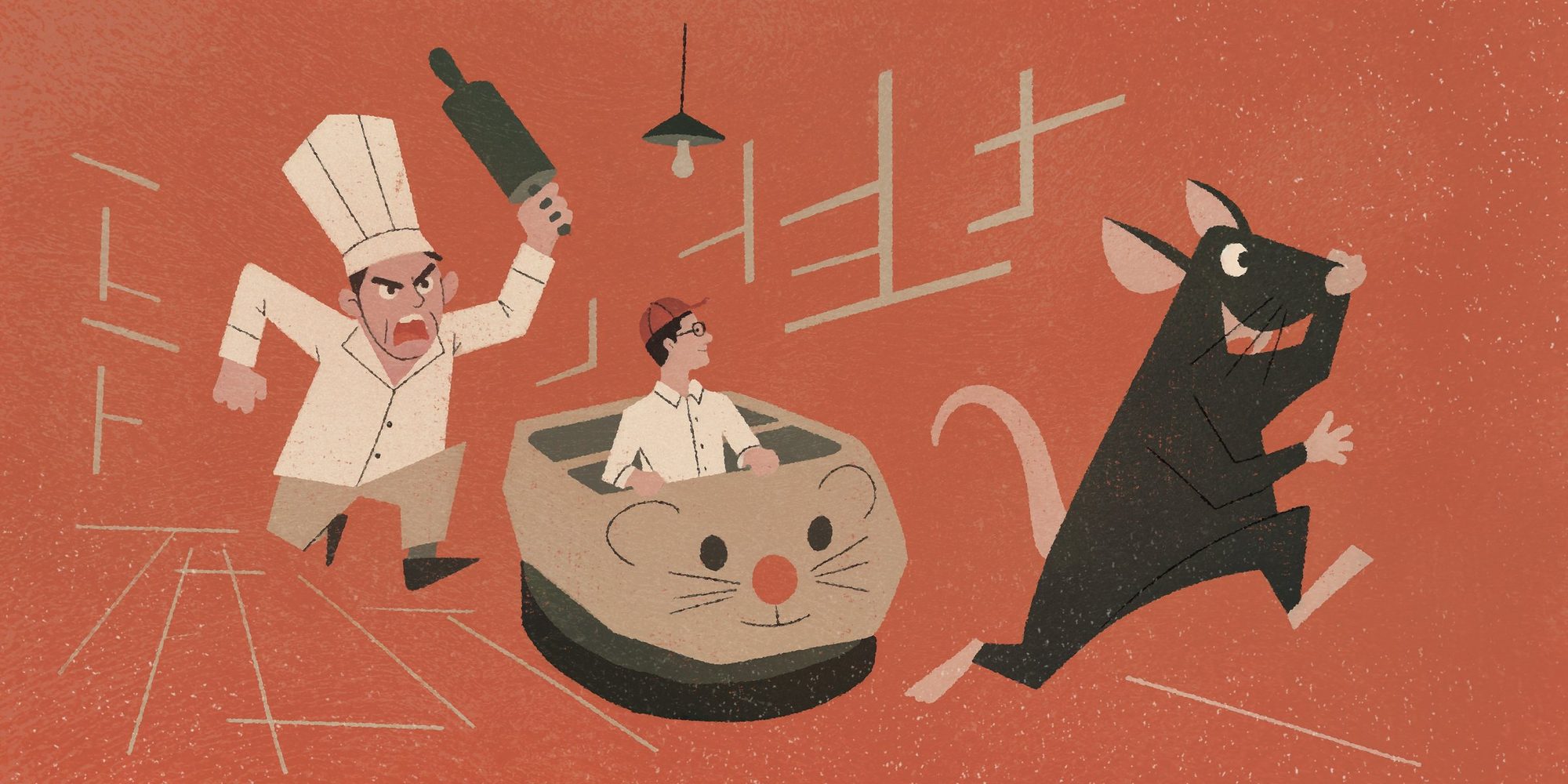
And yet I have to admit that Mission: Breakout is a good ride. The queue is full of detail about the Collector and the ride has a clear point of view, even though the source material means nothing to me. Ratatouille runs the other way: one of my favourite animated films, and the dark ride in Paris does nothing for me at all.
So whether I like a franchise turns out to have little to do with whether I rate the ride, even though I'd always assumed IP rides work because you love the IP. There are plenty of accounts of visitors falling for the Wizarding World without knowing the books. I'm not the only one.
Intellectual property
It's more than twenty years since Disney last opened a major ride that wasn't based on an existing property. Expedition Everest: a hundred-million-dollar mountain with a yeti and a story of its own, and the last of its kind. Everything since has been built around a brand, which I think is a shame.
I can find four reasons it went this way, and the first, predictably, is marketability. Tony Baxter of Disney Imagineering has pointed out that it's harder and harder to launch anything without "the security blanket of a known name". The Indiana Jones ride in Anaheim would have been a fine ride without Indy, he reckons, but a recognisable name guarantees you an audience.
The second is "synergy". At Epcot a Guardians of the Galaxy coaster replaced a ride about energy and oil, bizarrely hosted by a 90s Ellen DeGeneres: an odd concept swapped for one that doesn't fit. Joe Rohde has written that the question is no longer whether a ride expresses what the park is for, but whether "the mandate to use IP" has been met.
The third is obvious: nobody but Disney gets to use Disney princesses. A vertically integrated entertainment company can wring the most out of material it already owns, and nobody else has that option.
The last one is the most interesting from a designer's side, and it comes from imagineer Steve Kirk. Parks find it hard to produce characters of their own. Audiences generally adopt characters from other media. The exceptions, the pirates, the dolls in Small World, Figment from Journey Into Imagination, Kirk chalks up mostly to luck. Parks have become importers of the one thing the medium is worst at making.
Where the difference lies
So the brand is settled before the designers get near it. What's left to decide is what to do with it, and the options split roughly in two: re-enact the film, or make something that was never in it. A place the camera never reached, or a moment that wasn't in the plot.
As media, a dark ride and a film have more in common than you'd think. Both steer where you look, one by framing a shot, the other with light. Both involve someone working out a sequence, and how it reads visually.
The main difference is that a film controls what you see and when, which makes it good at stories built on a character: close-ups, cuts, music timed to the frame. A dark ride is better served by a place that resonates, precisely because it can't decide where you look and its timing is tied to the speed of a vehicle.
Joe Rohde, of Animal Kingdom, has described what that does to a story. In a cinema you sit still in the dark watching what happens to somebody else. In a park you're moving, and you're mostly attending to what's happening to you. The whole story has to be turned inside out to suit. He summed it up in the same conversation: you build a world, not necessarily a plot.
Frozen Ever After shows the problem clearly. The ride is well made, and the story still feels incomplete. What strikes me is that nothing connects the scenes. There's barely a reason for one tableau to become the next. You go from highlight to highlight with very little in between.
At the same time it doesn't use what a dark ride is good at, precisely because it stays so close to the film. Being walked past the scenes invites you to compare, and a ride that doesn't use its own strengths can't beat the thing you're comparing it to. Ratatouille did the same to me: loving the film didn't make me like the ride, because it was the same rooms and the same beats, in a story set just before the film's epilogue.
The wider world
Because you can look around, something has to be there that wasn't in the film: the part of the world the character never visited and the camera never covered. Just off Diagon Alley in the Wizarding World there's a record shop that appears in neither the books nor the films. The queue for the Jaws ride, which now only survives in Japan, has televisions running a fictional local channel, ad breaks included. Neither has a direct counterpart on screen, so the comparison I mentioned can't happen the same way. Both point at something larger, a world that carries on past the edge of the frame.
Adding things isn't enough on its own, though. Web Slingers, the shooting ride at Avengers Campus, dutifully invents new places like the WEB workshop. You're in a vehicle that's only used to park you neatly in front of each screen, and the gameplay isn't much fun to begin with. It reads as filler. An addition has to make the world richer, and build on the foundation the IP handed you.
Leave the film out altogether, then? That doesn't work either. In "Theme Park Design, the Art of Themed Entertainment", Younger argues that a well-loved character is "practically dictated". I'd extend that to famous scenes: Frozen Ever After without Let It Go is barely thinkable.
The paradox is that the thing everyone wants to see is the thing lodged most firmly in their memory, which makes it the hardest expectation to beat. Trowbridge, who went on to design the Star Wars lands at Disneyland and Hollywood Studios, said it's easy enough to put Luke on his desert planet, "but we know those scenes and we know Luke's story."
Baxter has described killing a Robin Hood proposal over what the world had to offer: "sticks and stones and rocks and leaves". His rule, stated later: "the rides are about exotic places not characters. The best attractions are where you suddenly find yourself in a jewel mine or flying over London."
Sotto agrees: "can you retell the story, or put someone in it as good as, if not better than, their expectation? So if you really can't tell the story or put someone in it better than the movie, then why are you doing it?". Treat the film as evidence the world exists, and build what the camera missed.
How it can work
Rohde has shown this working at the scale of an entire land. Avatar sits far less deep in the culture than Star Wars, the film was mostly a visual event, and I can't picture anyone queueing for a photo with Jake Sully. So the designers let the world carry it instead of the character or the plot.
Rohde's way of putting it: a famous film was once shot in Africa, but nobody flying to Africa expects to find Meryl Streep there. Africa is a place where a film can be made. Pandora gets the same treatment. Where the visitor stands isn't the place the film is set, and isn't even the same period. The angle isn't from the film either: you're an ecotourist visiting a valley years after the mining company pulled out. There are interpretive signs about the flora and fauna, warnings about environmental damage, and the restaurant is a converted company canteen.
Building your own is no guarantee, mind. Galaxy's Edge is largely new material and got a lukewarm reception, with comparisons to shopping centres. Partly, I suspect, because the source is so much richer and better loved than Avatar. Which is the paradox again: you have to show it, and showing it can't match what people brought with them. Star Tours handles it better, casting you as a tourist in a travel agency, with holiday adverts for the various planets playing in the queue.
My conclusion is that Mission: Breakout works because it adds to the world of the film without ignoring it, and because it still reads if the franchise means nothing to you. Ratatouille played it safer.
And then there's Kaatsheuvel, where a park has spent seventy years making its own characters out of public domain stories. Van de Ven set out his own rules for it: keep the story accessible, and go carefully with fantasy that visitors have already been touched by elsewhere.
Disney's decision to import worlds rather than make them was a business call, not something the medium required.